Bea Gonzalez chooses Paula Josemaría as partner for 2026 Premier Padel Tour season
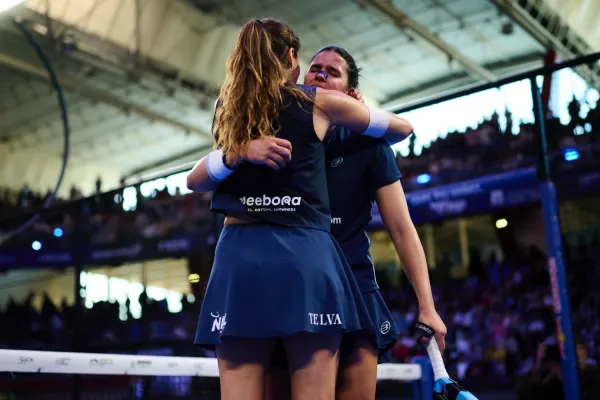
The most anticipated partnership in women's padel has been officially confirmed as Bea González and Paula Josemaría reunite ahead of the 2026 Premier Padel opener in Riyadh P1.

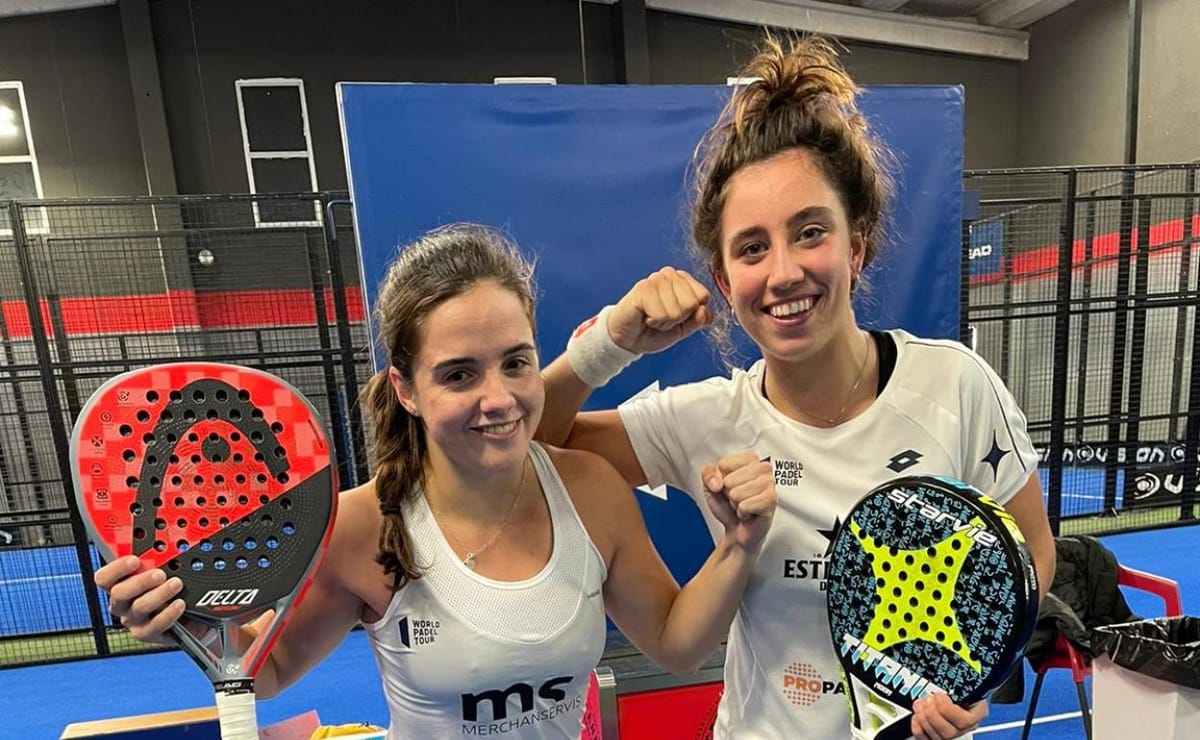
The women's padel circuit is bracing for seismic shifts as Beatriz González and Paula Josemaría formalize their partnership for 2026, creating what many analysts are already calling the most offensively potent pairing the sport has ever seen. The duo, who briefly shared the court at the tail end of the 2020 season during the Menorca Final Master, reunite five years later as seasoned champions with a singular ambition: to dethrone the dominant Gemma Triay and Delfina Brea.
The official announcement came through a playful social media post in mid-January, with both players exchanging hairstyles in a lighthearted reveal that belied the serious competitive statement it represented. Entering the season as the number two seeds with a combined 27,760 ranking points, González and Josemaría will make their competitive debut at the Riyadh Season P1 (February 9-14), where all eyes will be on how quickly their chemistry translates to the court.
A Season of Contrasts, A Year of Convergence
Paula Josemaría: The Unfulfilled Champion
For Paula Josemaría, 2025 represented both culmination and conclusion. After five extraordinary seasons alongside Ariana Sánchez—a partnership that yielded 44 titles, two world number one finishes, and a place in padel history—the 29-year-old from Extremadura found herself searching for new horizons following the pair's decision to separate in December.
The 2025 campaign with Sánchez produced six Premier Padel titles, including the FIP World Cup Pairs in Kuwait, and €273,000 in prize money. Yet despite their consistent excellence, the pair found themselves unable to reclaim the number one ranking from the surging Triay/Brea combination. Their final tournament together at the Barcelona Finals ended in a semi-final defeat to Alejandra Salazar and Martina Calvo—a result that underscored the need for change.
Josemaría's game remains defined by explosive power from the right side, devastating smashes that can end points from anywhere on the court, and an offensive mentality that dictates tempo. Her attacking prowess, honed over years at the elite level, makes her arguably the most impactful right-handed player on the circuit. However, the question entering 2026 centers on whether a new partnership can reignite the hunger that once propelled her to the sport's pinnacle.
Bea González: The Year of Redemption
If 2024 was Bea González's annus horribilis—plagued by foot thrombosis and pectoral injuries that derailed her season—then 2025 was her magnificent renaissance. The 24-year-old from Málaga transformed a promising partnership with 19-year-old Claudia Fernández into one of the season's defining narratives, finishing with six titles across all Premier Padel categories and establishing themselves as the only pair capable of consistently troubling the top two seeds.
González's statistics from the closing stretch were extraordinary: six titles from the season's final nine tournaments, including the Dubai P1, Mexico Major, and Barcelona Finals. In the decisive Barcelona final against Triay and Brea, González recorded 31 winners—17 more than any other player on court—in a performance that many observers considered the individual peak of the women's season.
The head-to-head numbers against the eventual world number ones tell the story: seven victories in nine encounters, including a perfect 4-0 record in finals. González's ability to raise her level in crucial moments, combined with her relentless physicality and aggressive shot-making, established her as the most dangerous player in women's padel when operating at her ceiling.
"This is the moment when I feel best in every aspect of my life," González stated after the Barcelona triumph. "It's the stage of my career where I feel most prepared to fight for the number one spot next year."
Tactical Blueprint: Attack, Attack, Attack
The González/Josemaría partnership represents a fundamental departure from recent women's padel orthodoxy. Historically, dominant pairings have relied on clear role differentiation—one player managing tempo and construction, the other delivering the finishing blow. The Triay/Brea model, the Sánchez/Josemaría structure before it, and even González's successful collaboration with Fernández all followed this template to varying degrees.
This new alliance shatters that paradigm. González and Josemaría both possess elite offensive capabilities from their respective sides of the court. Both can smash, both can volley aggressively at the net, and both are capable of seizing control of points without waiting for the perfect setup.
The tactical implications are profound:
Net Dominance: With two players comfortable taking the net aggressively, opponents will face constant pressure from both sides. The traditional strategy of lobbing to isolate one player becomes less effective when both partners can finish overhead.
Tempo Control: Their shared offensive mentality should allow them to dictate match pace from the opening point, forcing opponents into defensive postures and creating opportunities through sustained aggression.
Mental Pressure: Facing two attackers capable of ending points from any position creates psychological strain. Opponents cannot relax or regroup during rallies, as any defensive lapse can be immediately punished from either side.
The parallel to the men's game is unmistakable. Just as Arturo Coello and Agustín Tapia revolutionized the men's circuit with their dual-threat offensive system—moving beyond the traditional Galán/Lebrón or even earlier models—González and Josemaría aim to bring that same evolution to the women's game.
The Personality Factor
Beyond tactics and technique, the partnership's success will hinge on psychological compatibility. Josemaría brings the calm authority of a former world number one, someone who has navigated the pressure of maintaining elite status for multiple seasons. Her experience managing the emotional demands of major finals and crucial tournaments provides invaluable stability.
González, by contrast, brings intensity and visible emotion. Her game thrives on energy and momentum, and her ability to channel competitive fire into productive aggression has been central to her recent success. The question is whether these contrasting temperaments will create balance or friction.
Early training reports suggest promising chemistry. Both players have spoken about mutual respect and shared ambition. Josemaría values González's hunger and youth; González respects Josemaría's championship pedigree and experience. Whether this translates to on-court success under pressure remains the season's most compelling question.
The Challenge Ahead
The path to number one runs directly through Triay and Brea, who finished 2025 with nine titles and a stranglehold on the ranking system that they secured in mid-summer. The defending champions bring their own formidable combination: Triay's tactical intelligence and defensive excellence married to Brea's powerful left-handed attack.
However, González's 2025 record against them (7-2) provides compelling evidence that this new partnership possesses the tools to challenge their dominance. The Riyadh Season P1 represents the first opportunity to test whether that individual success can translate to a new partnership dynamic.
Other threats loom as well. Ari Sánchez and Andrea Ustero have already impressed in pre-season exhibitions, while Sofía Araújo and Claudia Fernández represent another experienced-youth combination that could factor into title races. The women's circuit enters 2026 with greater depth and competitive balance than perhaps any previous season.
The Riyadh Crucible
The Riyadh Season P1 will provide immediate answers. As the number two seeds, González and Josemaría enter with favorable positioning but face the unique challenge of a new partnership competing against settled combinations with established patterns and chemistry.
The tournament format—a P1 category event with significant ranking points and a €479,068 prize purse—means every match carries consequence. Early exits could sow doubt; deep runs could establish immediate momentum and credibility.
For González, Riyadh represents validation that her 2025 peak was not an anomaly but rather her new baseline. For Josemaría, it offers the chance to prove that the post-Sánchez chapter can match or exceed what came before.
And for women's padel, it promises the beginning of what could be the most competitive and compelling season in the sport's professional history—with González and Josemaría positioned as the primary challengers to an established order that has dominated for too long.
The revolution, as they say, will be televised. It begins in Riyadh on February 9.
The Riyadh Season P1 runs from February 9-14, 2026, with qualifying rounds beginning February 7. The tournament will be broadcast live on Red Bull TV, with quarter-finals, semi-finals, and finals available for streaming.